


Our rice mill
From paddy rice to rice, step by step: this is how we process our rice.
Discover the process13 steps to turn paddy rice into our rice.
This is rice milling in the new Cascina Alberona rice mill: the journey of the grain from the cleaning of freshly harvested paddy rice to packaging, through hulling, selection, whitening and final checks. Below you will find each phase, step by step.
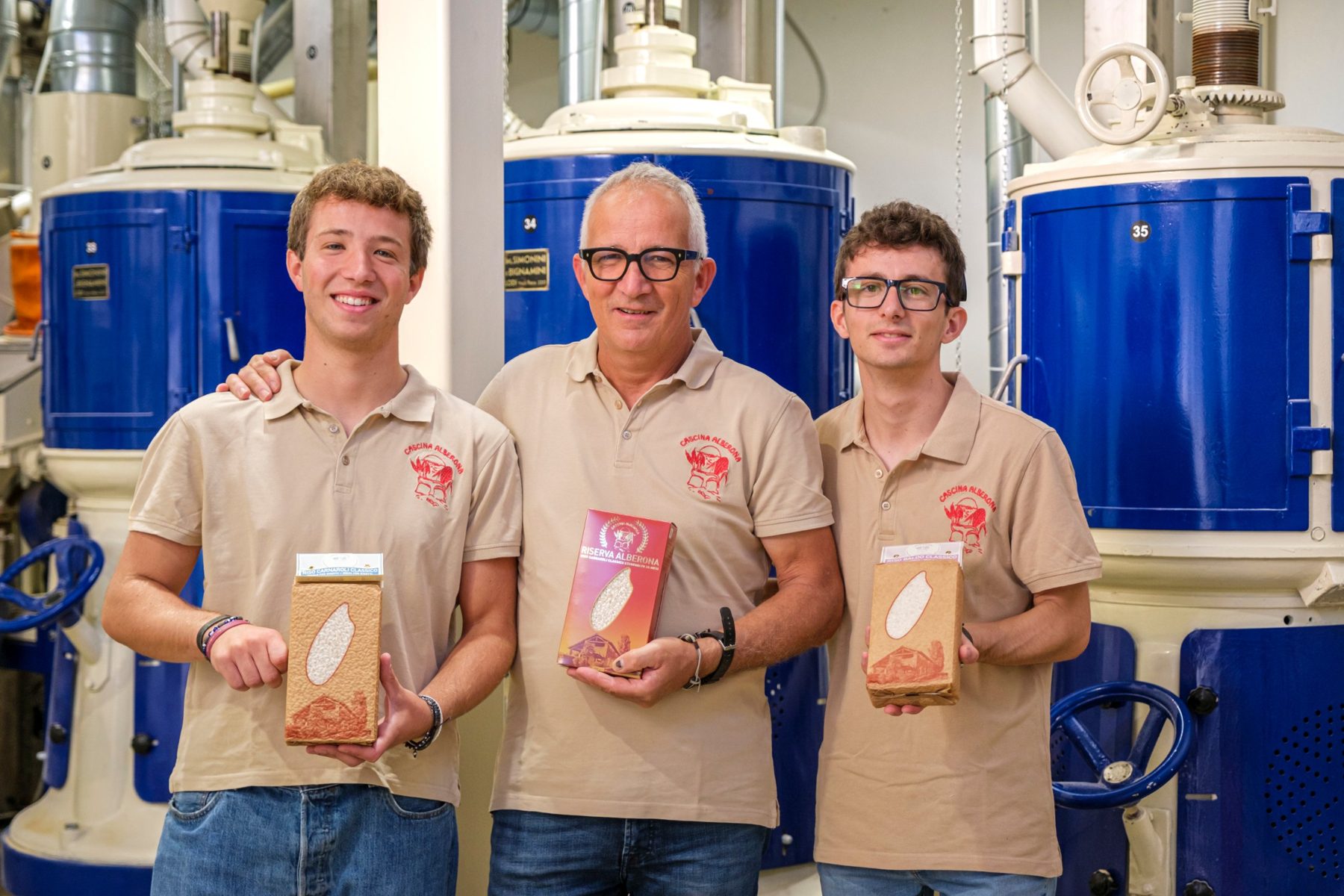
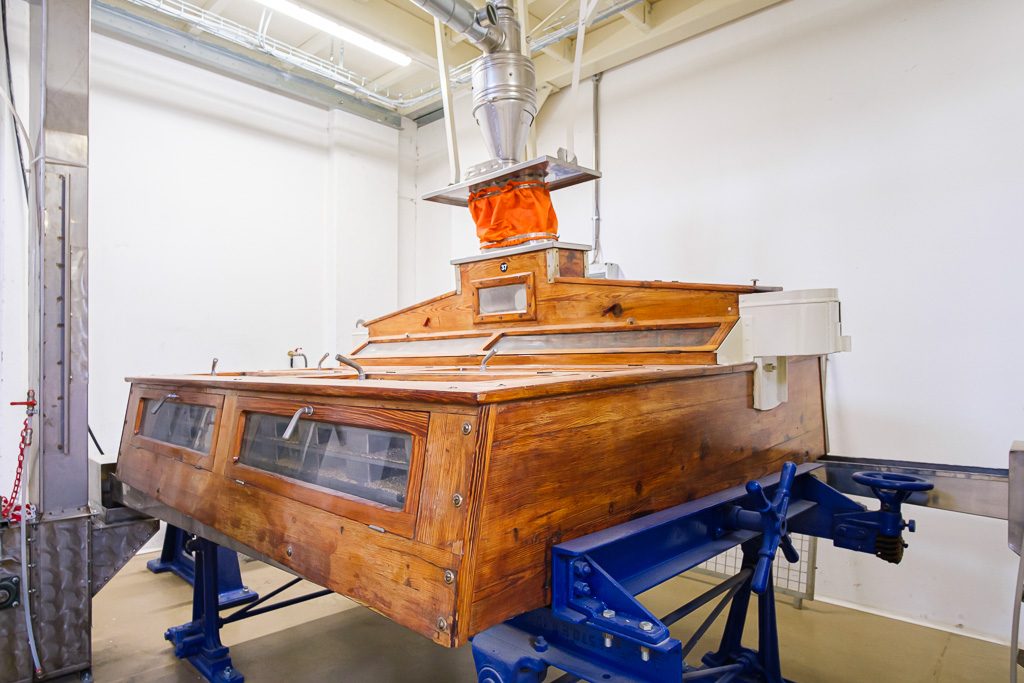
Not all the machines you will meet are new: some we recovered, restored and put back to work, like the three whiteners, which are more than fifty years old and process the grain slowly and gently.
Cleaning and hulling
Cleaner
Frees the paddy rice from the impurities left after harvest: bits of straw, foreign seeds, traces of other crops.
The process begins with the cleaner, which removes any impurities left in the paddy rice after harvest.
These may include small bits of straw, foreign seeds or traces of other crops, such as maize, that earlier cleaning operations did not manage to remove completely.
The aim is to feed the processing line with a product that is as clean and uniform as possible.
Husker
Two abrasive rollers, spinning fast, remove the husk, the outermost part of the grain: this gives us brown rice.
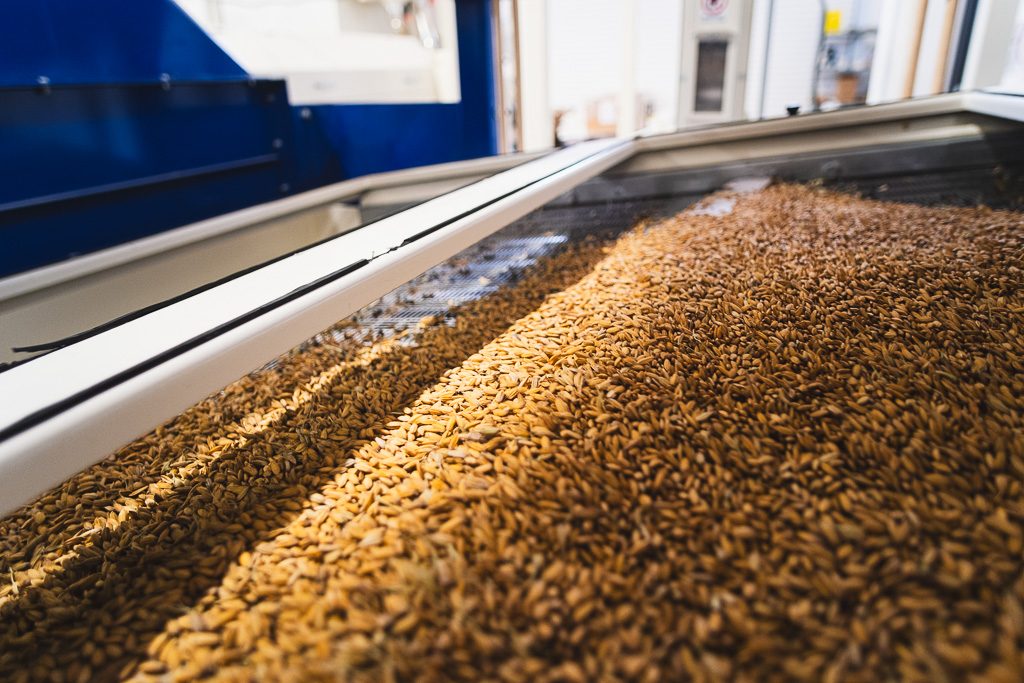
The paddy rice then goes into the husker.
Inside the machine, two abrasive rollers spinning at high speed remove the outermost part of the grain, the husk.
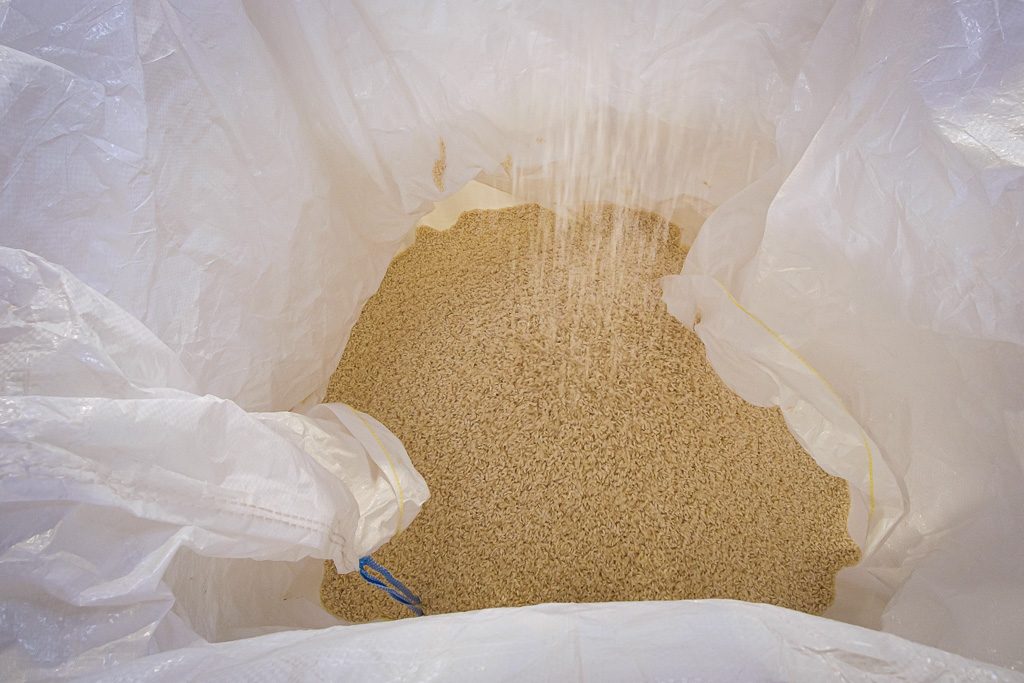
Once the husk is gone, we have brown rice.
However, the husker cannot remove the husk from 100% of the grains in a single pass: a small share of the paddy rice is still “dressed” and will need to be processed again.
Aspirator
Uses the difference in weight to separate the lighter husk from the brown rice, which carries on along the line.
Right after the husker, the product goes through the aspirator.
The aspirator separates the husk, now detached, from the brown rice, taking advantage of the difference in weight between the two materials.
The husk, being lighter, is separated and collected, while the brown rice carries on along the line.
Grain selection
Paddy
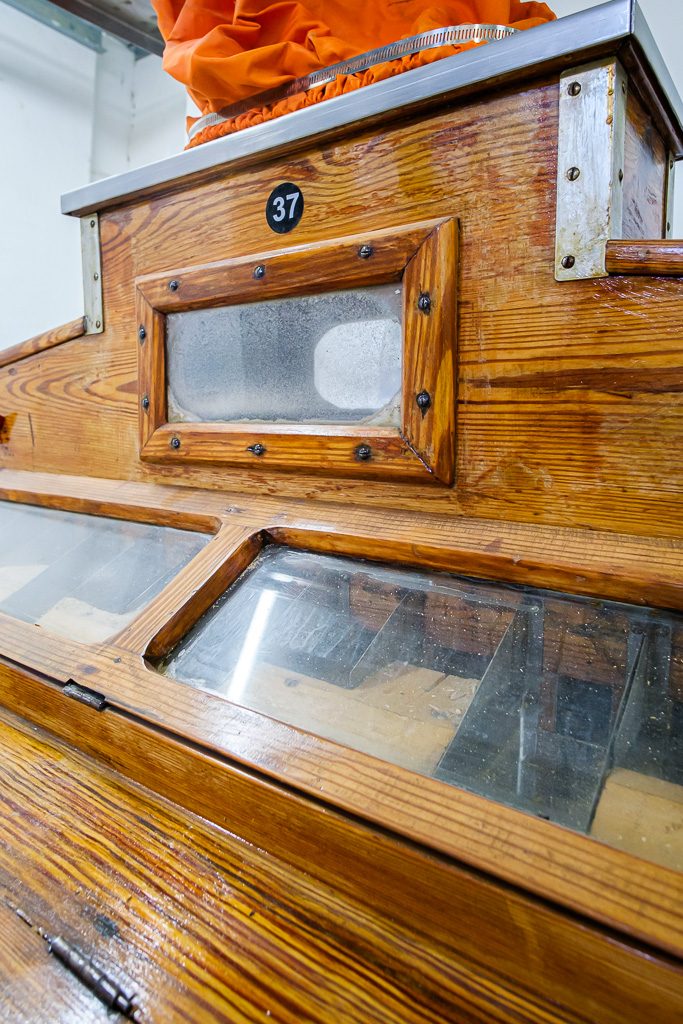
A 40-chamber machine that we recovered and put back to work. It separates brown rice from paddy rice that is still “dressed”, which goes back to the husker.
Next we use the Paddy, a machine that we recovered, restored and put back to work in the new rice mill.
The Paddy has 40 chambers and its job is to separate the brown rice from the paddy grains that have not been completely husked.
The brown rice continues through the process, while the paddy that still has its husk is sent back to the husker, without returning to the cleaner.
This way the grain is put back into the process until the husk is properly removed.
Green grain separator
Takes out the smallest grains, not yet fully ripe. This is where green grain comes from.
After the Paddy, our brown rice goes through the green grain separator.
This machine separates the smaller, not fully ripe grains, which had not reached full development at harvest time.
This step gives us green grain as a by-product.
Destoner
Removes small stones and other heavy foreign bodies before whitening, to protect both the rice and the machines.
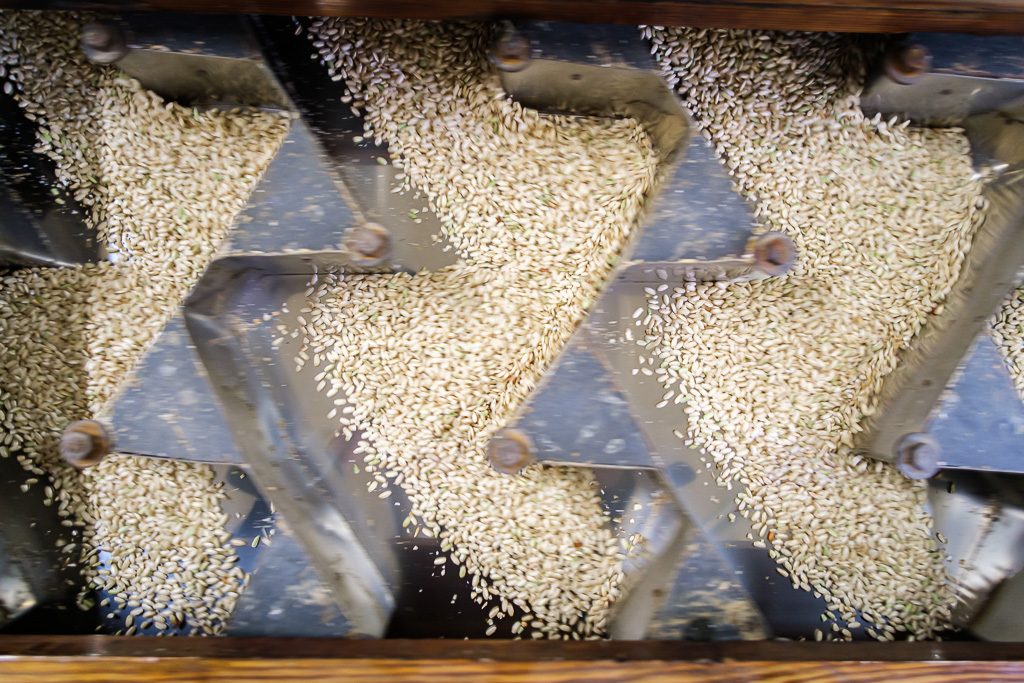
The brown rice then goes through the destoner.
This machine removes any small stones or other heavy foreign bodies that may still be in the product.
It is a particularly important step before whitening, both for the quality of the rice and to protect the machines that come next.
Whitening
Choosing the type of milling
From here the path changes depending on the rice we want to obtain: brown, semi-milled or white.
At this point the path changes depending on the product we want to obtain.
To obtain brown rice, the grain does not go through whitening.
To obtain semi-milled rice, we carry out two whitening passes.
To obtain white rice, the product goes through all three whiteners.
The grain does not go through whitening.
Two whitening passes.
The product goes through all three whiteners.
Whitening
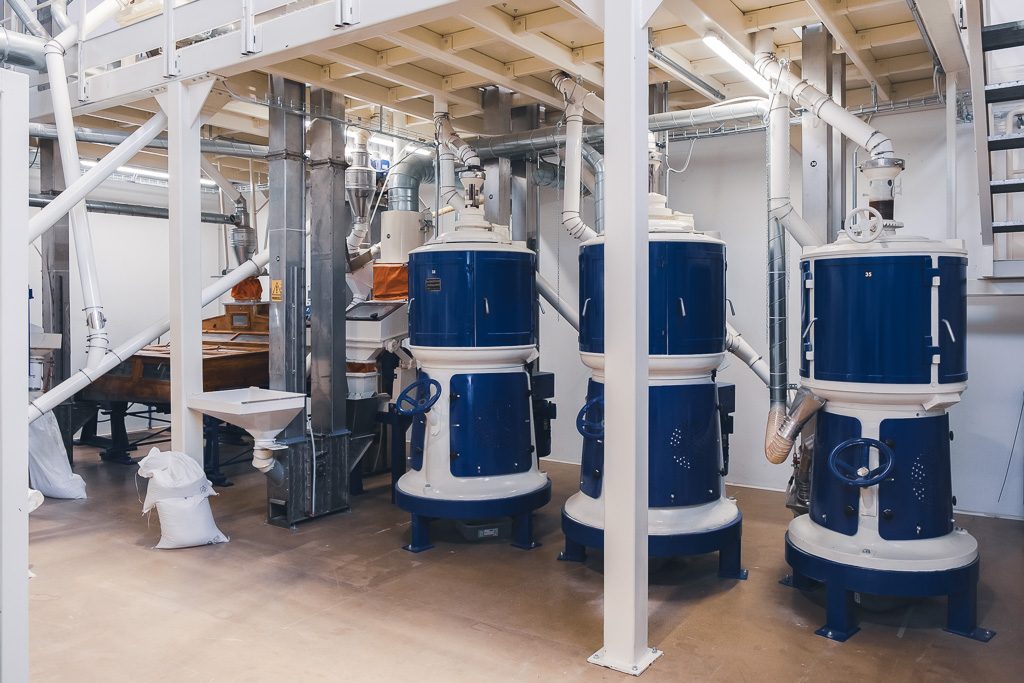
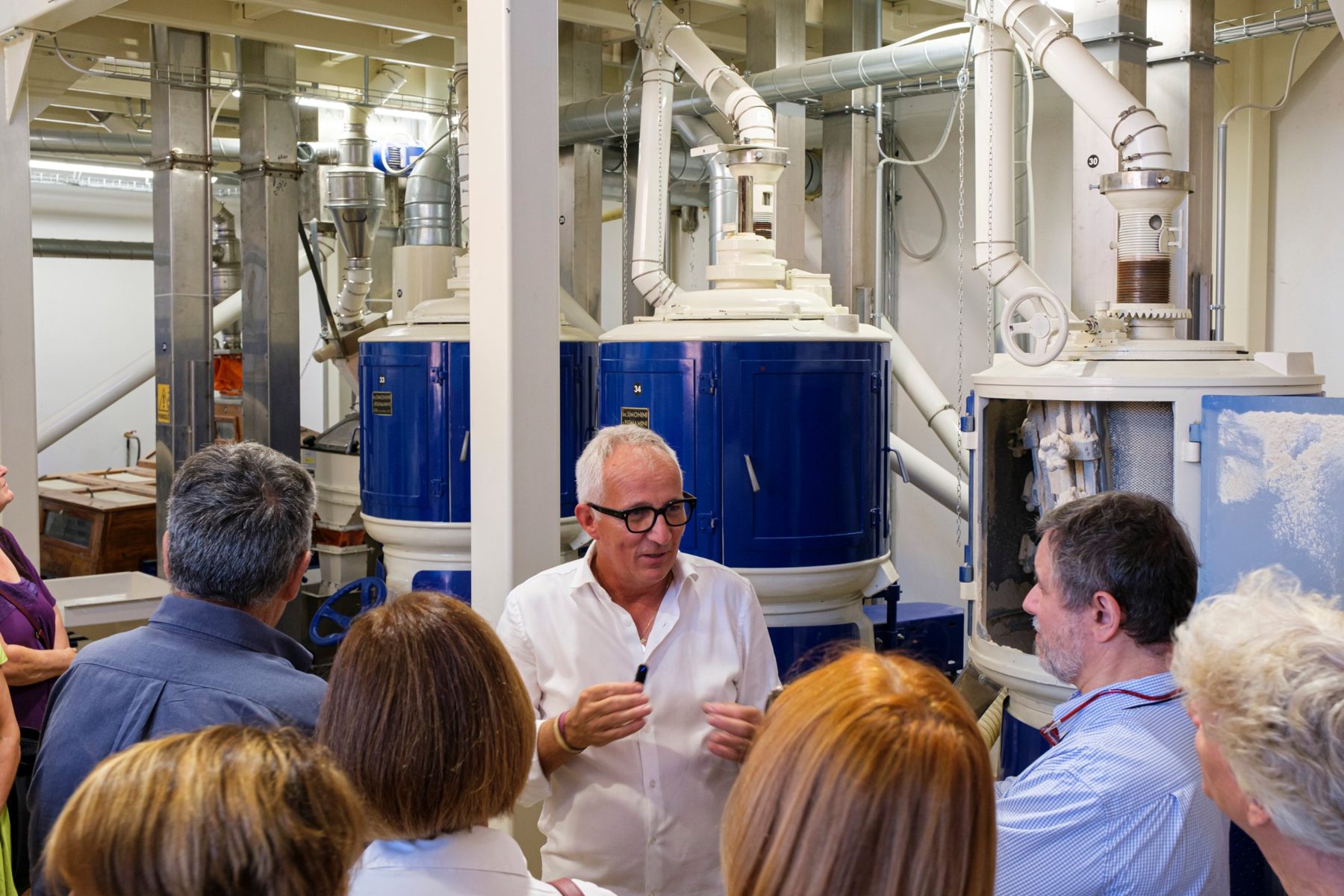
Three whiteners more than fifty years old, two Simonini and one Minghetti, remove the outer layers of the grain with an abrasive stone, slowly and gently.
We use three whiteners that are more than fifty years old, completely restored and brought back into service while building the new rice mill.
We have two Simonini and one Minghetti.
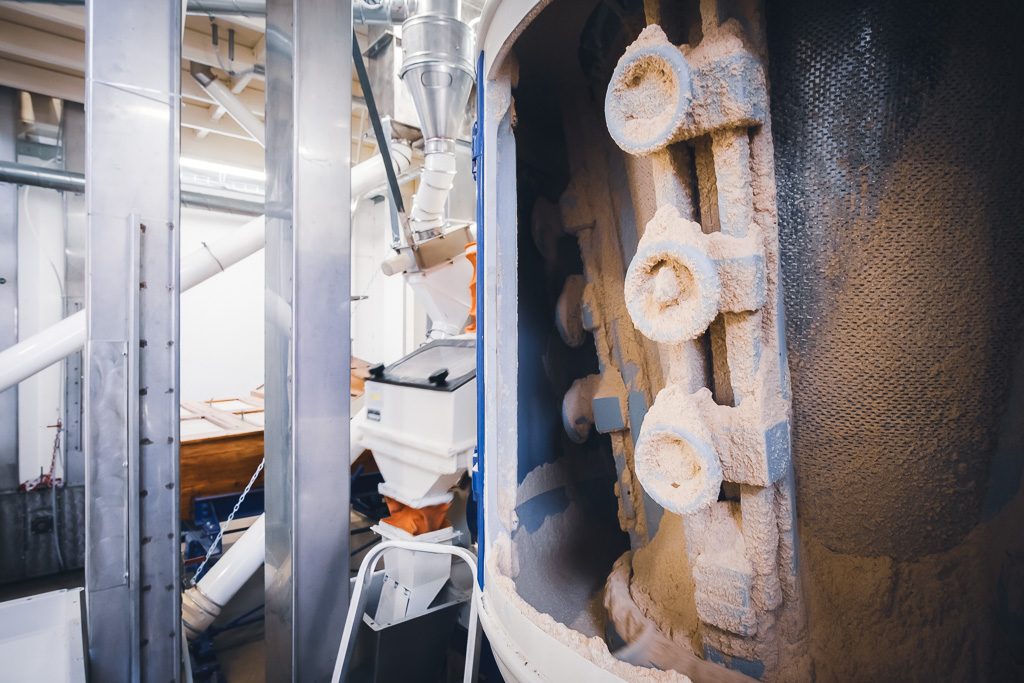
Inside the whiteners the brown rice comes into contact with an abrasive stone. Through the constant movement of the grain and the abrasion, the outer layers of the brown rice are gradually removed.
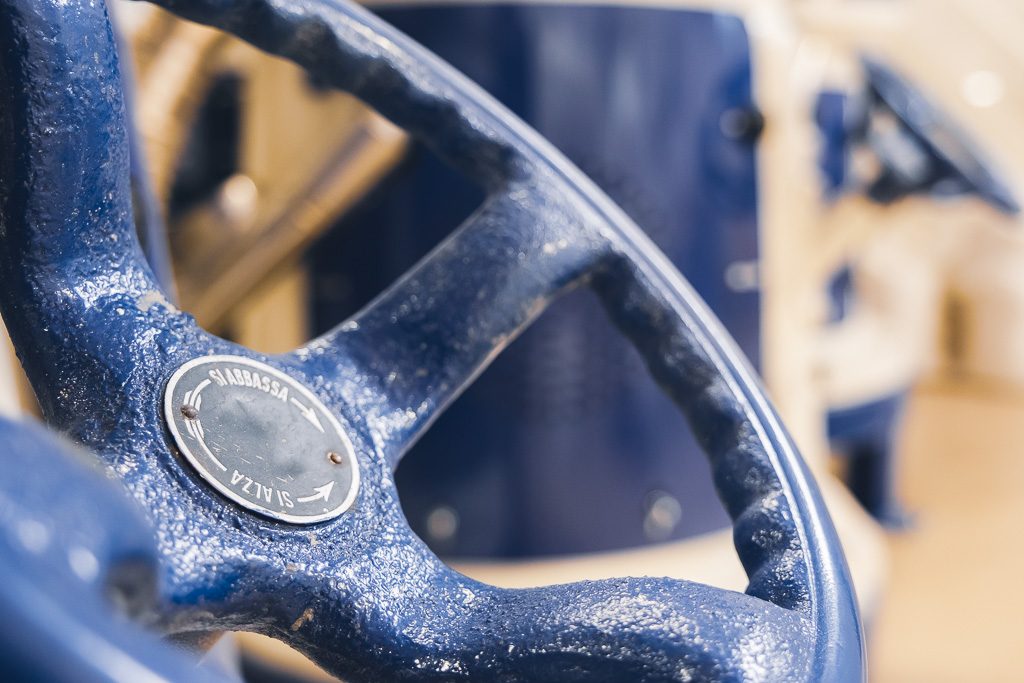
The work is done gradually over several passes. By adjusting the available space and how long the grain stays in the machine, we can set the degree of whitening we want.
We chose to recover and use these machines because they process rice slowly and gently, limiting the heating of the grain during whitening.
This stage gives us another by-product: bran, the finest part, which comes from removing the outer layers of the grain.
Tarara
A stream of air carries away dust and light particles left after whitening, for cleaner, more even rice.
After whitening, our rice goes through the tarara.
The tarara uses a stream of air to remove any dust, light particles and small impurities left after processing.
This step helps make the product cleaner and more even.
Final selection
Separator
Divides regular grains from smaller or differently sized ones, before the final check.
Next the rice goes through a separator, which lets us divide regular grains from smaller ones or ones of different sizes.
It is a further selection step before the broken grains are separated and the final optical check.
Indented cylinders
Separate whole rice from broken grains, based on their length.
The rice then enters the indented cylinders.
Here we separate whole rice from broken rice, that is, grains that broke during processing.
Separation relies on the different length of the grain: broken grains are collected separately, while whole rice carries on its way.
Broken rice can later be put to use, for example to make rice flour.
Optical sorter
Analyses the grains with photocells and colour reading and removes the ones that do not conform with targeted jets of compressed air.
The rice then reaches the optical sorter, one of the last and most accurate checks on the line.
The machine analyses the grains through photocells and colour-reading systems.
Based on the parameters we set, such as grain colour and size, the sorter identifies non-conforming grains and removes them with targeted jets of compressed air.
This way we can separate, for example:
- stained grains;
- grains with abnormal colouring;
- oversized or undersized grains;
- any remaining green grain;
- crodo rice, that is wild rice, also recognisable by its characteristic reddish streaks.
The optical sorter therefore lets us obtain a final product that is as uniform as possible.
Checking and packaging
Final check and packaging
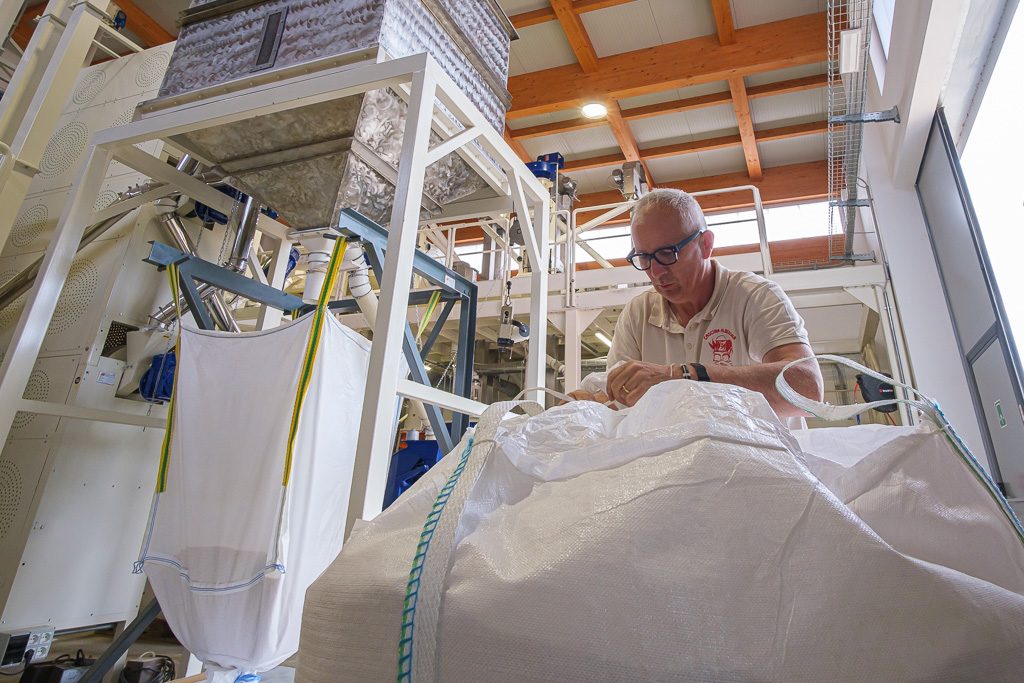
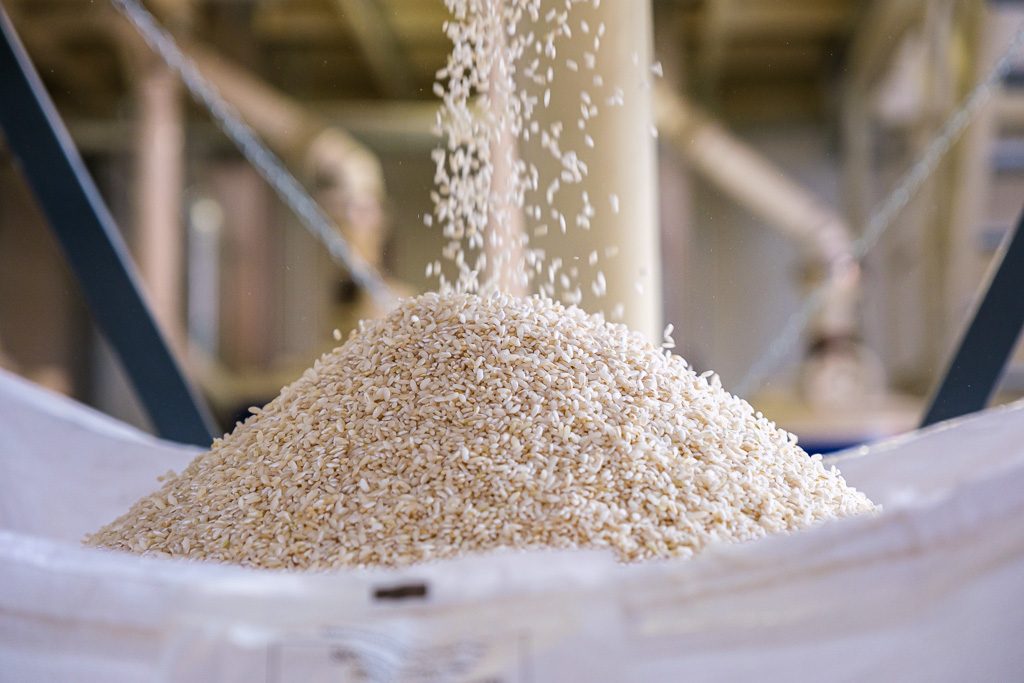
One last pass through the destoner and the cleaner, then the rice is packed: vacuum-sealed, loose or in a protective atmosphere.
After the optical sorter, our rice goes through one last pass in the destoner and the cleaner.
It is a final check to make sure the product is as clean and uniform as possible, free of foreign bodies.
At this point the rice is ready to be packed. We always do the packing ourselves: vacuum-sealed, loose or in a protective atmosphere (MAP).
The rice is also used for our risottos and other Cascina Alberona products.
Our machines
Alongside the most modern technology, the rice mill runs machines with a long history: we recovered them, restored them and put them back to work. Three numbers tell you a lot about how we work.
Whiteners
They are more than fifty years old: we completely restored them and brought them back into service. They are two Simonini and one Minghetti and process the rice slowly and gently, limiting the heating of the grain.
Paddy chambers
A machine that we recovered, restored and put back to work in the new rice mill. It separates brown rice from paddy rice that has not yet been completely husked.
Pixels per camera
Our optical sorter is a brand-new colour machine: with 5400-pixel RGB cameras it spots non-conforming grains and removes them with targeted jets of compressed air.
What remains after processing
Paddy rice does not produce only rice. During processing we also obtain by-products: each one comes from a specific step on the line and is put to good use.
Husk
The outer skin of the paddy rice. It is separated during hulling, the step that turns paddy rice into brown rice.
Rich in fibre and silica.
- Animal bedding
- Biomass
- Natural building
Green grain
Grains that are not fully ripe, recognisable by their still greenish colour.
Separated during selection.
- Animal feed
Bran
Obtained during whitening, when the outer layers of the grain are removed.
Rich in fibre, protein, natural fats and antioxidants.
- Animal feed
- Rice bran oil
- Food and cosmetics
Broken rice
Grains that break during processing and are collected separately.
Rich in starch and carbohydrates.
- Rice flour
- Food processing
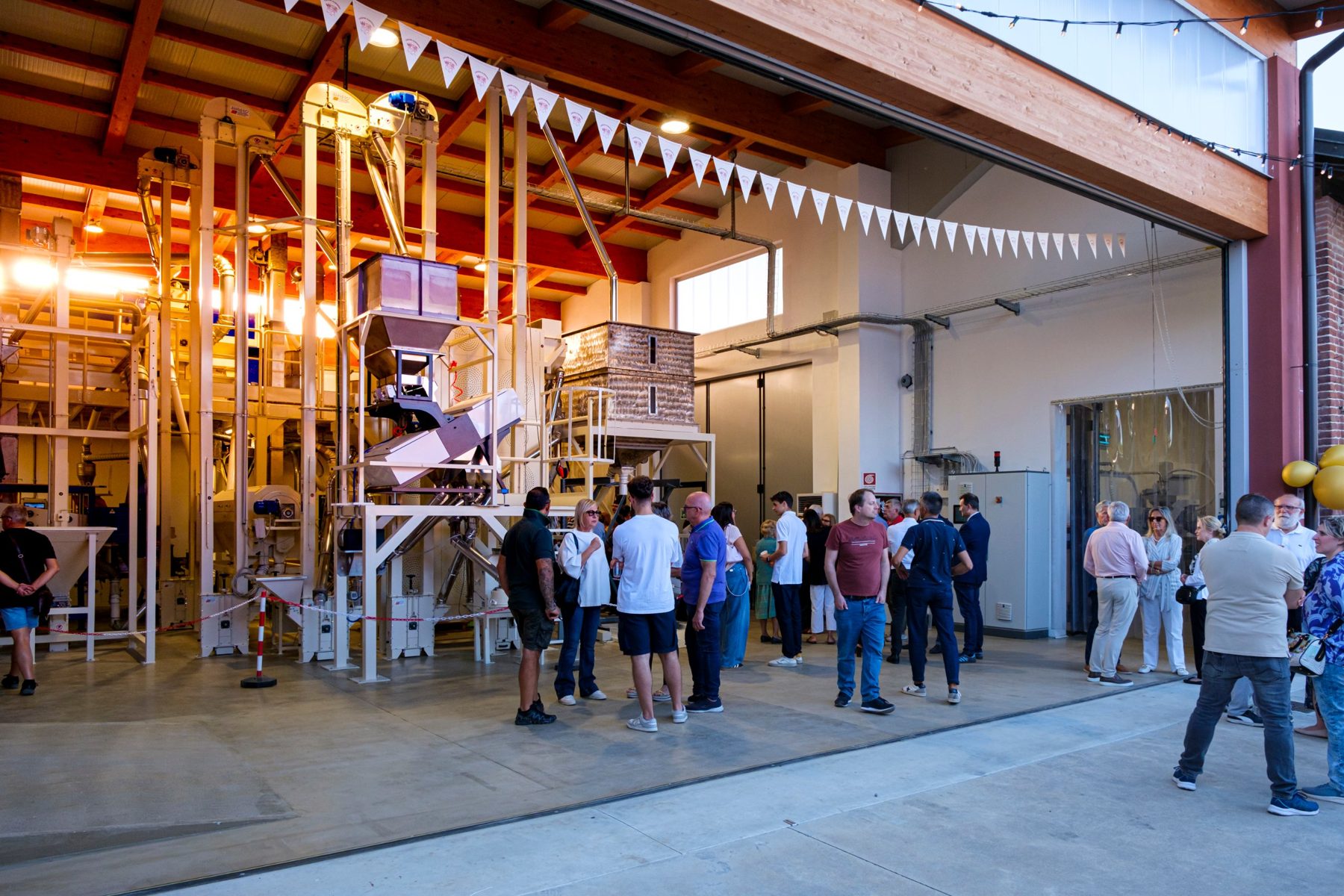
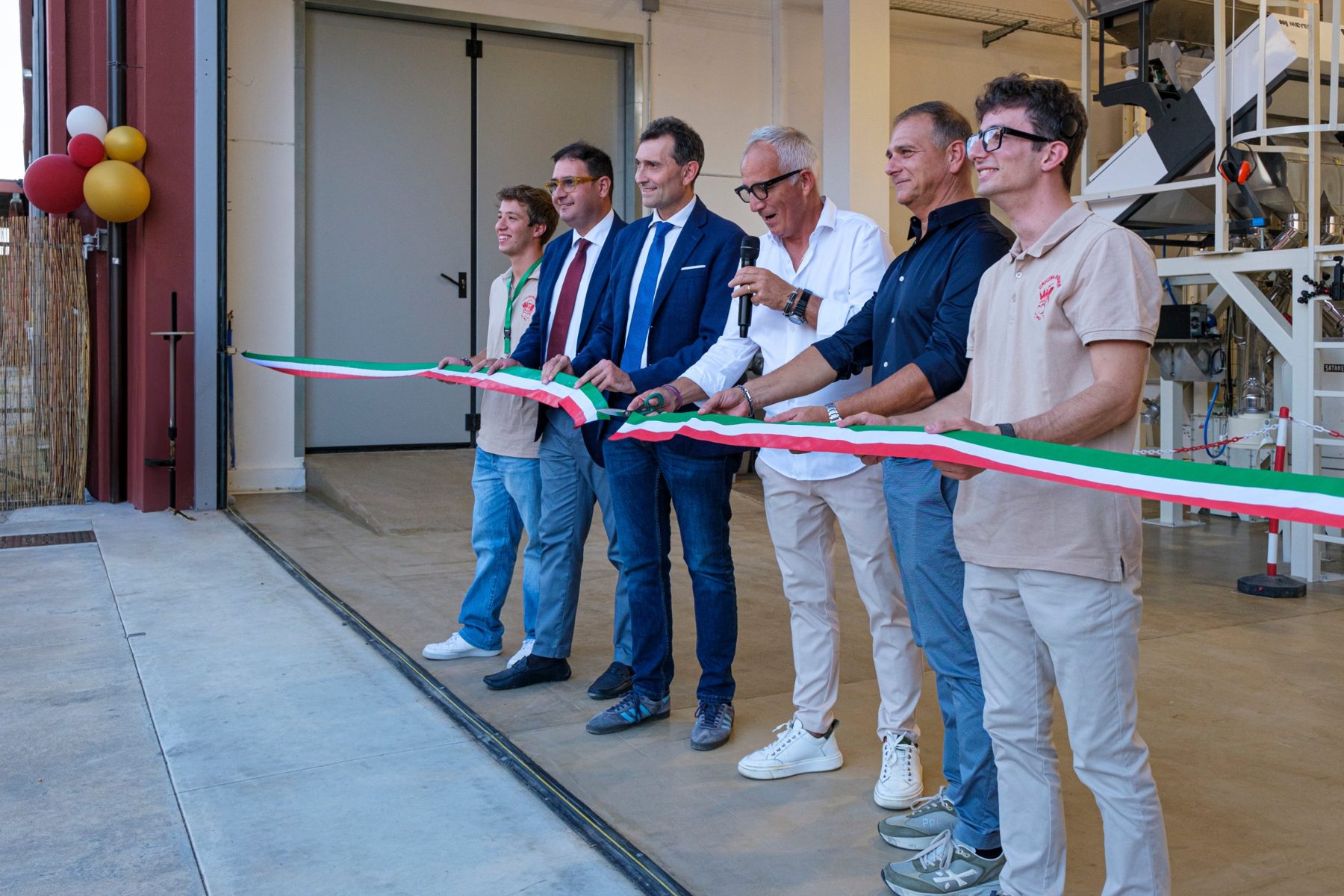
The inauguration of the rice mill
The day we opened the doors of the new rice mill to everyone who has accompanied us in this project.
Want to process your rice with us?
If you are a company or a producer looking for a rice mill to process your rice (or other products), write to us. Tell us what you need, for example quantity, variety and type of processing: we will get back to you to assess your request together.
Photo by Roberto Morelli